Buy زنا.com ?
We are moving the project
زنا.com .
Are you interested in purchasing the domain
زنا.com ?
domain@kv-gmbh.de · 0541-91531010
Buy زنا.com ?
When is the imparfait used?
The imparfait is used in French to describe ongoing or repeated actions in the past, to set the scene or provide background information, to express habitual actions in the past, and to describe physical and emotional states in the past. It is often used in conjunction with the passé composé to provide a more complete picture of past events. The imparfait is also commonly used in storytelling and narration. **
What is the story in French imparfait?
The French imparfait is used to describe ongoing or habitual actions in the past. It sets the scene, describes the background, or provides context for a specific event or action in the past. It is often used to talk about childhood memories, past habits, or to describe a situation or state of being in the past. The imparfait is formed by taking the present tense nous form of the verb, dropping the -ons ending, and adding the imparfait endings (-ais, -ais, -ait, -ions, -iez, -aient). **


Similar search terms for Imparfait
Top-Angebote
Products related to Imparfait:
-
Bluebird Closer to Love: How to Attract the Right Relationships and Deepen Your Connections by Vex King - PAPERBACKDo you love your partner but want to rekindle that ‘in love’ feeling?Do you go on plenty of dates but can’t seem to click with the right person?Do you keep having the same conflicts with your partner?Embark on a journey of self-love to experience authentic connection and unconditional love . . .Speaking from his personal experiences of healing from heartbreak and finding lasting love, Vex shares practical advice and thought-provoking insights to help you:- Understand how you love and the role you play in your connections- Heal from past conditioning, unprocessed emotions and trauma- Cultivate healthy habits, boundaries and behaviours- Nurture meaningful, mindful and lasting connections.Essential reading for anyone looking to deepen their understanding of themselves and their relationships.7,99 £*Shipping: 2,99 £Secure redirect to the provider
-
Inspire Curations Love Quote Removable Vinyl Wall Decal For Family Home Decor Love Quote Removable Vinyl Wall Decal For Family Home DecorTurn an ordinary wall into a heartfelt reminder of what matters most. This love quote wall sticker brings warmth, personality, and meaning to your favorite living spaces without the commitment of paint or framed artwork. Made from removable vinyl...43,00 $*Shipping: 0,00 $Secure redirect to the provider
-
Mastering Relationships by Astha Kapoor - Relationship & Self-Help Guide - New Paperback - Practical Advice for Healthier RelationshipsRelationships shape almost every part of our daily happiness, yet so many of us never learn the practical skills needed to keep them strong. Mastering Relationships by Astha Kapoor is a down-to-earth non-fiction guide that tackles communication, boundaries, and emotional connection head-on. Rather than leaning on dense psychological jargon, the author offers clear, usable advice for anyone wanting calmer conversations, deeper trust, and fewer repeated arguments. This paperback is written for real life, not theory, making it a genuinely approachable read for partners, friends, and families alike. Mastering Relationships walks readers through the everyday friction points that quietly erode connection: miscommunication, unspoken expectations, and boundaries that are either too rigid or missing altogether. Astha Kapoor breaks these challenges into manageable, relatable chapters, encouraging self-reflection.2,99 £*Shipping: 2,99 £Secure redirect to the provider




-
What is the difference between Imparfait and passé Composé?
The main difference between Imparfait and passé Composé is the way they are used to describe actions in the past. Imparfait is used to describe ongoing or repeated actions in the past, while passé Composé is used to describe specific actions that were completed in the past. Additionally, Imparfait is often used to set the scene or provide background information, while passé Composé is used to highlight the main events or actions. In terms of formation, Imparfait is formed by using the present tense of the verb as a base and adding specific endings, while passé Composé is formed by using the auxiliary verb "avoir" or "être" with the past participle of the main verb. **
-
What are the irregular verbs in the imparfait tense?
In the imparfait tense, irregular verbs include être (to be), avoir (to have), savoir (to know), vouloir (to want), pouvoir (to be able to), and aller (to go). These verbs have unique conjugations in the imparfait tense and do not follow the regular pattern of regular -er, -ir, or -re verbs. It is important to memorize the irregular conjugations of these verbs to use them correctly in the imparfait tense. **
-
What is the difference between Imparfait and Conditionnel présent?
The Imparfait is used to describe ongoing or repeated actions in the past, while the Conditionnel présent is used to express hypothetical or uncertain actions in the present or future. The Imparfait is used to set the scene or provide background information, while the Conditionnel présent is used to express a condition or consequence. Additionally, the Imparfait is formed by adding specific endings to the root of the verb, while the Conditionnel présent is formed by adding specific endings to the infinitive form of the verb. **
-
How do you translate the French imparfait into German?
To translate the French imparfait into German, you can use the German simple past tense (Präteritum) or the present perfect tense (Perfekt). The choice between the two depends on the context and the specific meaning you want to convey. The simple past tense is more commonly used in written German, while the present perfect tense is more common in spoken German. It's important to pay attention to the verb conjugations and the nuances of each tense to accurately convey the meaning of the imparfait in German. **

What causes fear of relationships, love, intimacy, friends, and kissing?
Fear of relationships, love, intimacy, friends, and kissing can be caused by a variety of factors, including past negative experiences, low self-esteem, fear of rejection or abandonment, and a lack of trust. Traumatic experiences in past relationships or childhood can also contribute to fear of intimacy and forming close connections with others. Additionally, societal pressures and expectations, as well as fear of vulnerability and emotional pain, can also play a role in causing fear of these aspects of relationships. Therapy and self-reflection can help individuals address and overcome these fears. **
Can someone help me with the imparfait and passé composé?
Yes, I can help you with the imparfait and passé composé. The imparfait is used to describe ongoing or repeated actions in the past, while the passé composé is used to describe completed actions in the past. Understanding when to use each tense depends on the context of the sentence and the specific action being described. If you have specific examples or questions, feel free to ask for clarification. **
Top-Angebote
Products related to Imparfait:
-
Amistad Act Like a Lady, Think Like a Man, Expanded Edition: What Men Really Think About Love, Relationships, Intimacy, and CommitmentThe #1 New York Times smash bestseller Revised and expanded with new material. With over two million copies sold, Act Like a Lady, Think Like a Man has become a bestseller around the world. In conjunction with its second movie sequel to be released this summer, Steve Harvey has updated his classic with new advice and insights. Whether it’s why women should enforce a “90-Day Probation Period” before they give their men sexual “benefits”―the way Ford motor company withholds medical and dental benefits until an employee has been on the job for 3 months―or explaining to women why men would rather “fix it” than talk about it, Steve Harvey’s advice is always spot-on and laden with warmth and humor. But behind the laughter is his sincere desire to help women understand how men think. Now, Steve shares even more practical dating advice. Does it feel like your man’s friends are against you? What should you know about being a wife, before you say “I Do”? Steve provides the answers to these questions and more, and offers new insights including: How to put spice into your relationship 8 sure-fire ways to keep your cool when his “ex” shows up A test for you and your partner, to see if you’re actually ready for marriage. . . or need more time A 90-day abstinence calendar, and tips for making it through this important trial period With liberal use of his own adventures in love and courtship, Act Like a Lady, Think Like a Man is an honest, compelling, and realistic examination of how men think about love and relationships, and what women need to know so that they can set realistic expectations of the men in their life.4,90 £*Shipping: 1,99 £Secure redirect to the provider
-
Orion The 5 Love Languages, Seven Principles for Marriage & Attached 3 Book Set – Relationship & Love Guide CollectionThe 5 Love Languages, The Seven Principles For Making Marriage Work, Attached 3 Books Collection Set The 5 Love Languages: In the #1 New York Times bestseller The 5 Love Languages, you'll discover the secret that has transformed millions of relationships worldwide. Whether your relationship is flourishing or failing, Dr. Gary Chapman's proven approach to showing and receiving love will help you experience deeper and richer levels of intimacy with your partner--starting today. The Seven Principles For Making Marriage Work: Gottman has scientifically analysed the habits of married couples and established a method of correcting the behaviour that puts thousands of marriages on the rocks. He helps couples focus on each other, on paying attention to the small day-to-day moments that, strung together, make up the heart and soul of any relationship. Attached: Pioneered by psychologist John Bowlby in the 1950s, the field of attachment explains that each of us behaves in relationships in one of three distinct ways: Anxious people are often preoccupied with their relationships and tend to worry about their partner’s ability to love them back.Avoidant people equate intimacy with a loss of independence and constantly try to minimize closeness.Secure people feel comfortable with intimacy and are usually warm and loving.19,99 £*Shipping: 2,99 £Secure redirect to the provider
-
Bluebird Closer to Love: How to Attract the Right Relationships and Deepen Your Connections by Vex King - PAPERBACKDo you love your partner but want to rekindle that ‘in love’ feeling?Do you go on plenty of dates but can’t seem to click with the right person?Do you keep having the same conflicts with your partner?Embark on a journey of self-love to experience authentic connection and unconditional love . . .Speaking from his personal experiences of healing from heartbreak and finding lasting love, Vex shares practical advice and thought-provoking insights to help you:- Understand how you love and the role you play in your connections- Heal from past conditioning, unprocessed emotions and trauma- Cultivate healthy habits, boundaries and behaviours- Nurture meaningful, mindful and lasting connections.Essential reading for anyone looking to deepen their understanding of themselves and their relationships.7,99 £*Shipping: 2,99 £Secure redirect to the provider
-
When is the imparfait used?
The imparfait is used in French to describe ongoing or repeated actions in the past, to set the scene or provide background information, to express habitual actions in the past, and to describe physical and emotional states in the past. It is often used in conjunction with the passé composé to provide a more complete picture of past events. The imparfait is also commonly used in storytelling and narration. **
-
What is the story in French imparfait?
The French imparfait is used to describe ongoing or habitual actions in the past. It sets the scene, describes the background, or provides context for a specific event or action in the past. It is often used to talk about childhood memories, past habits, or to describe a situation or state of being in the past. The imparfait is formed by taking the present tense nous form of the verb, dropping the -ons ending, and adding the imparfait endings (-ais, -ais, -ait, -ions, -iez, -aient). **
-
What is the difference between Imparfait and passé Composé?
The main difference between Imparfait and passé Composé is the way they are used to describe actions in the past. Imparfait is used to describe ongoing or repeated actions in the past, while passé Composé is used to describe specific actions that were completed in the past. Additionally, Imparfait is often used to set the scene or provide background information, while passé Composé is used to highlight the main events or actions. In terms of formation, Imparfait is formed by using the present tense of the verb as a base and adding specific endings, while passé Composé is formed by using the auxiliary verb "avoir" or "être" with the past participle of the main verb. **
-
What are the irregular verbs in the imparfait tense?
In the imparfait tense, irregular verbs include être (to be), avoir (to have), savoir (to know), vouloir (to want), pouvoir (to be able to), and aller (to go). These verbs have unique conjugations in the imparfait tense and do not follow the regular pattern of regular -er, -ir, or -re verbs. It is important to memorize the irregular conjugations of these verbs to use them correctly in the imparfait tense. **
Similar search terms for Imparfait
-
Inspire Curations Love Quote Removable Vinyl Wall Decal For Family Home Decor Love Quote Removable Vinyl Wall Decal For Family Home DecorTurn an ordinary wall into a heartfelt reminder of what matters most. This love quote wall sticker brings warmth, personality, and meaning to your favorite living spaces without the commitment of paint or framed artwork. Made from removable vinyl...43,00 $*Shipping: 0,00 $Secure redirect to the provider
-
Mastering Relationships by Astha Kapoor - Relationship & Self-Help Guide - New Paperback - Practical Advice for Healthier RelationshipsRelationships shape almost every part of our daily happiness, yet so many of us never learn the practical skills needed to keep them strong. Mastering Relationships by Astha Kapoor is a down-to-earth non-fiction guide that tackles communication, boundaries, and emotional connection head-on. Rather than leaning on dense psychological jargon, the author offers clear, usable advice for anyone wanting calmer conversations, deeper trust, and fewer repeated arguments. This paperback is written for real life, not theory, making it a genuinely approachable read for partners, friends, and families alike. Mastering Relationships walks readers through the everyday friction points that quietly erode connection: miscommunication, unspoken expectations, and boundaries that are either too rigid or missing altogether. Astha Kapoor breaks these challenges into manageable, relatable chapters, encouraging self-reflection.2,99 £*Shipping: 2,99 £Secure redirect to the provider
-
EasyGlide After Intimacy - Intimate Wipes (25 pack)Intimate wipes provide instant refreshment after intimacy. Why it's good?Gentle, nourishing ingredients for skin healthAntibacterial properties for maximum hygieneEasy to use and convenient packagingProvides a refreshing sensation anywhere, anytimeKeep in mind:The wipes are not reusable; they are designed for single useDo not flush the wipes down the toilet, as they may clog the systemHow to use:Take a wipe from the package, and gently clean the intimate area. After use, dispose of it in the trash, and do not flush it down the toilet. To maintain freshness, reseal the packaging to prevent the wipes from drying out.Package contents:25 Intimate wipes with antibacterial oilsProduct features:Ingredients: Aqua, gluconolactone, sodium benzoate, calcium gluconate, aloe barbadensis leaf extract, chamomilla recutita extract, caprylic/capric triglyceride, coco glucoside tocopherol, glycerin, dehydroacetic acid, citric acid, sodium citrate, melaleuca alternifolia (tea tree oil), cymbopogon schoenanthus (lemongrass oil)Skin-friendly and nourishing formulaPackaging: convenient size suitable for travel (package of 25)Tip:For maximum freshness, store the wipes in a cool, dry place and avoid direct sunlight.User manual5,64 £*Shipping: 6,10 £Secure redirect to the provider
-
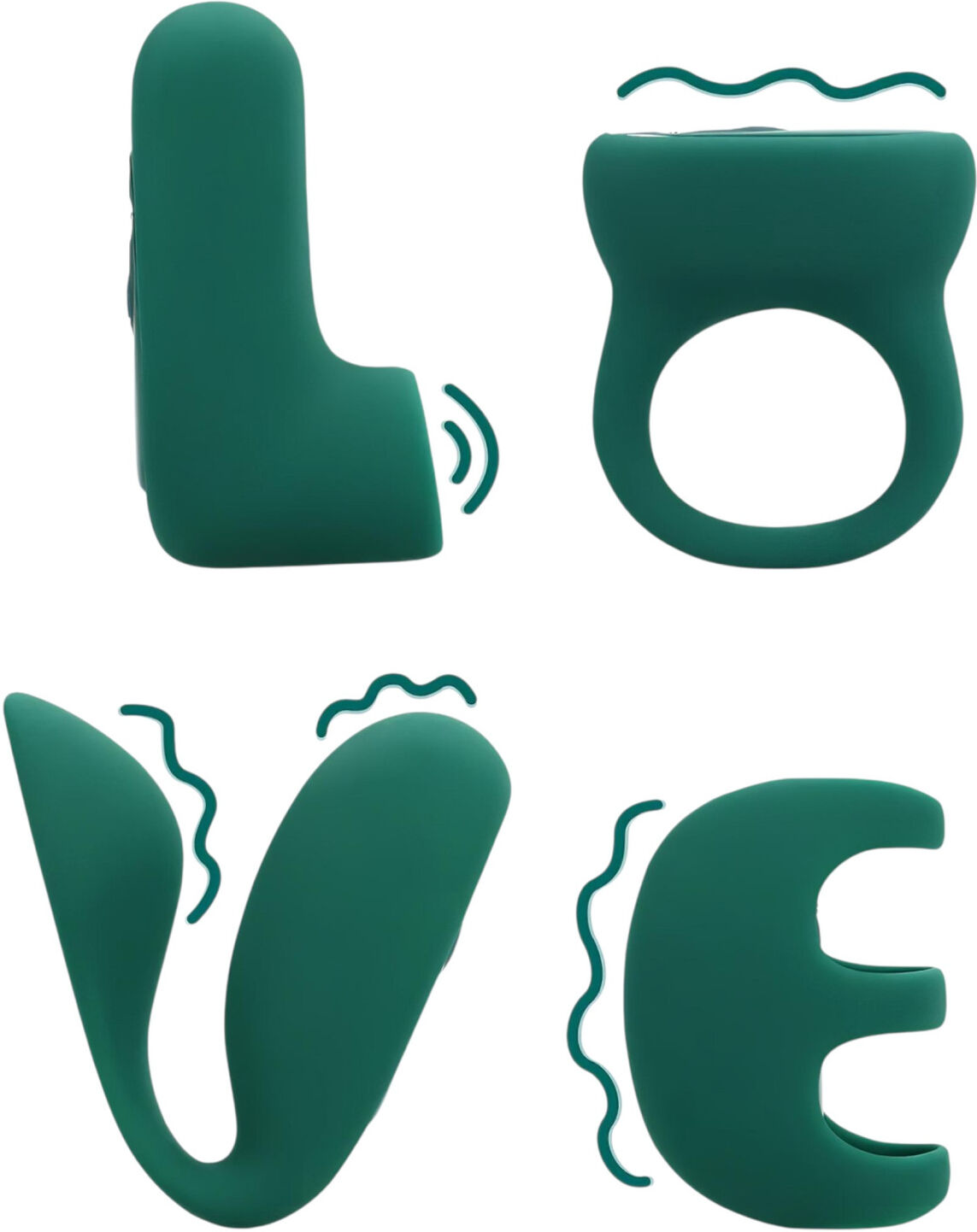
Loveline (S)explore - Couples' Intimacy Kit (Green)Spice up your evening with the Loveline (S)explore sex toy set – featuring 4 different accessories to enhance your couple's pleasure!Why is the Loveline (S)explore sex toy set great for couples?The Loveline (S)explore set is the perfect gift for couples or even for yourself if you want to explore a variety of pleasurable experiences. The set contains 4 unique tools – a penis ring, clitoral stimulator, finger vibrator, and a couple's accessory –, all powered by a single bullet vibrator. With 9 vibration modes, flexible silicone material, and ergonomic design, every occasion will be unique and exciting.Why customers love the Loveline (S)explore set4-in-1 experience – includes a penis ring, clitoral stimulator, finger vibrator, and couple’s play accessory in one package.Universal bullet vibrator – compatible with all accessories, making it versatile to use.9 vibration modes – varied stimulation for both partners.Premium material – skin-friendly silicone and ABS combination.Compact and lightweight – easy to carry and store anywhere.Quiet operation – under 40 dB, for discreet use.What's included in the package1 penis ring1 clitoral stimulator1 finger vibrator1 couple’s play accessory1 bullet vibrator (compatible with all devices)Magnetic USB charging cableProduct FeaturesDimensions: 5.50 x 2.00 x 4.80 cmDiameter: 2.40 cmWeight: 107 gMaterial: silicone, ABSNumber of Motors: 1Vibration Modes: 9Rotation Speed: 9500 RPMNoise Level: approx. 40 dBPower Supply: rechargeable (USB)Battery Life: approx. 50 minutesCharging Time: approx. 60 minutesWaterproof: noPhthalate-free: yesColor: greenHow to useSelect your desired accessory, insert the bullet vibrator, and switch to your favorite vibration mode. Use plenty of water-based lubricant for maximum comfort and pleasure.ControlThe bullet vibrator is easily controlled with a single button, allowing you to quickly switch between the 9 vibration modes.Charger connectionThe device can be charged via USB, so you can easily power it up anywhere, making sure it's always ready for new adventures.Important considerations when using the Loveline (S)explore set:Since the product is not waterproof, do not use it in water, and be careful not to let the vibrating part come into direct contact with water when cleaning. After use, clean the silicone parts with warm water and an intimate cleaner, then allow them to dry.User manual44,61 £*Shipping: 6,10 £Secure redirect to the provider
-
What is the difference between Imparfait and Conditionnel présent?
The Imparfait is used to describe ongoing or repeated actions in the past, while the Conditionnel présent is used to express hypothetical or uncertain actions in the present or future. The Imparfait is used to set the scene or provide background information, while the Conditionnel présent is used to express a condition or consequence. Additionally, the Imparfait is formed by adding specific endings to the root of the verb, while the Conditionnel présent is formed by adding specific endings to the infinitive form of the verb. **
-
How do you translate the French imparfait into German?
To translate the French imparfait into German, you can use the German simple past tense (Präteritum) or the present perfect tense (Perfekt). The choice between the two depends on the context and the specific meaning you want to convey. The simple past tense is more commonly used in written German, while the present perfect tense is more common in spoken German. It's important to pay attention to the verb conjugations and the nuances of each tense to accurately convey the meaning of the imparfait in German. **
-
What causes fear of relationships, love, intimacy, friends, and kissing?
Fear of relationships, love, intimacy, friends, and kissing can be caused by a variety of factors, including past negative experiences, low self-esteem, fear of rejection or abandonment, and a lack of trust. Traumatic experiences in past relationships or childhood can also contribute to fear of intimacy and forming close connections with others. Additionally, societal pressures and expectations, as well as fear of vulnerability and emotional pain, can also play a role in causing fear of these aspects of relationships. Therapy and self-reflection can help individuals address and overcome these fears. **
-
Can someone help me with the imparfait and passé composé?
Yes, I can help you with the imparfait and passé composé. The imparfait is used to describe ongoing or repeated actions in the past, while the passé composé is used to describe completed actions in the past. Understanding when to use each tense depends on the context of the sentence and the specific action being described. If you have specific examples or questions, feel free to ask for clarification. **
* All prices are inclusive of VAT and, if applicable, plus shipping costs. The offer information is based on the details provided by the respective shop and is updated through automated processes. Real-time updates do not occur, so deviations can occur in individual cases. ** Note: Parts of this content were created by AI.